If the internet works in one browser but not another on the same device and network, the connection itself is probably available. Focus on the browser that fails. Test a private window, update and restart it, remove data for the affected site, and check extensions before resetting Windows, DNS, or the router.
Confirm the comparison before changing anything
| Test result | Most useful next step |
|---|---|
| One site fails in one browser only | Check that site’s data, permissions, content blocking, and compatibility |
| Every site fails in one browser | Restart and update that browser, then check extensions and its profile |
| The site works in a private window | Check stored site data and extensions used in normal browsing |
| Several browsers fail on the same device | Check device security software, proxy, VPN, DNS, and the network |
| Every browser fails on every device | Check the router, modem or ONT, provider, and website status |
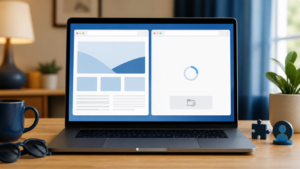
Type the same full address into both browsers and test them within a few minutes. Confirm that both use the same network and VPN state. A phone browser that silently switches to mobile data is not a clean comparison.
1. Try two unrelated websites
If only one site fails, the browser may be holding bad site data or blocking something that page needs. If several unrelated sites fail, the problem is broader inside that browser. Note the exact message rather than calling every blank page an internet outage.
Google Chrome Help also recommends opening a failing page in another browser to separate a webpage or network problem from Chrome. That comparison is evidence, not a reason to reinstall immediately.
2. Open a private window
Open an Incognito, InPrivate, or Private window in the affected browser and enter the address again. Private browsing starts a separate session and limits the stored data used during that session. Extensions may also behave differently, depending on their permissions and the browser.
If the site works privately, do not delete every saved login yet. Start with data for that site and inspect extensions that block ads, scripts, trackers, pop-ups, or network traffic. If private mode fails in the same way, continue with the browser update and profile checks.
3. Fully restart and update the affected browser
Close every window from that browser, wait for it to exit, and reopen it. Install the current stable update from the browser’s own About or Help screen, then restart it when prompted. Google and Microsoft both include update, restart, tab, memory, and extension checks in their browser troubleshooting guidance.
Do not download a browser update from a pop-up on an unknown website. Use the built-in updater or the browser maker’s official download page.
4. Remove data for the affected site
Cookies and local site data can hold a broken login, redirect, permission, or page state. Use the browser’s privacy settings to find the affected domain and remove its stored data. Expect to sign in again. Reload the site through its normal home page instead of an old saved checkout or account URL.
Deleting one site’s data is narrower than clearing all browsing history, cookies, and sessions. Mozilla lists site data, extensions, browser settings, and blocked content among the causes of pages that load incorrectly.
5. Test extensions one at a time
Turn off extensions that can change page content or traffic, then reload after each change. Start with ad blockers, script blockers, privacy tools, VPN extensions, proxy tools, coupon add-ons, and security extensions. Google and Microsoft document that extensions may read or change site data according to their permissions.
Remove an extension you do not recognize. If the browser is managed by work or school, leave required extensions and policies in place and contact the administrator. Do not disable the operating system firewall or antivirus as a blanket browser fix.
6. Compare the browser profile and network settings
Try a Guest profile or a new temporary browser profile when the option is available. If the clean profile works, look for the cause in the original profile’s saved data, extensions, synchronization, or settings. Move bookmarks only after identifying what must be kept.
Check whether the failing browser uses a custom proxy, VPN extension, Secure DNS setting, or strict content protection that differs from the working browser. Keep managed settings. If both browsers use the same operating system proxy and only one fails, changing the router is unlikely to help.
7. Reset or reinstall only after the narrow tests
Use the browser’s documented settings reset when updates, site data, extensions, and a clean profile have not explained the fault. Read the reset summary first so you know what it changes. Save needed bookmarks and account recovery information before reinstalling.
If several browsers now fail, stop treating it as a browser-only problem. The Windows DNS troubleshooting guide covers device-wide name-resolution failures. If the device also fails on another trusted network while other devices work, use the one-device WiFi checks.
When the website owner must fix compatibility
Contact the site owner when the page fails in a current, clean browser profile but works consistently in another current browser, especially if other sites work normally. Send the exact URL, browser version, visible error, whether private mode changed it, and whether extensions were disabled. Do not bypass a certificate or malware warning to force the page open.